Category: Home Care Planning

  • What does a geriatric care plan actually include when your parent has multiple health conditions?

    What does a geriatric care plan actually include when your parent has multiple health conditions?

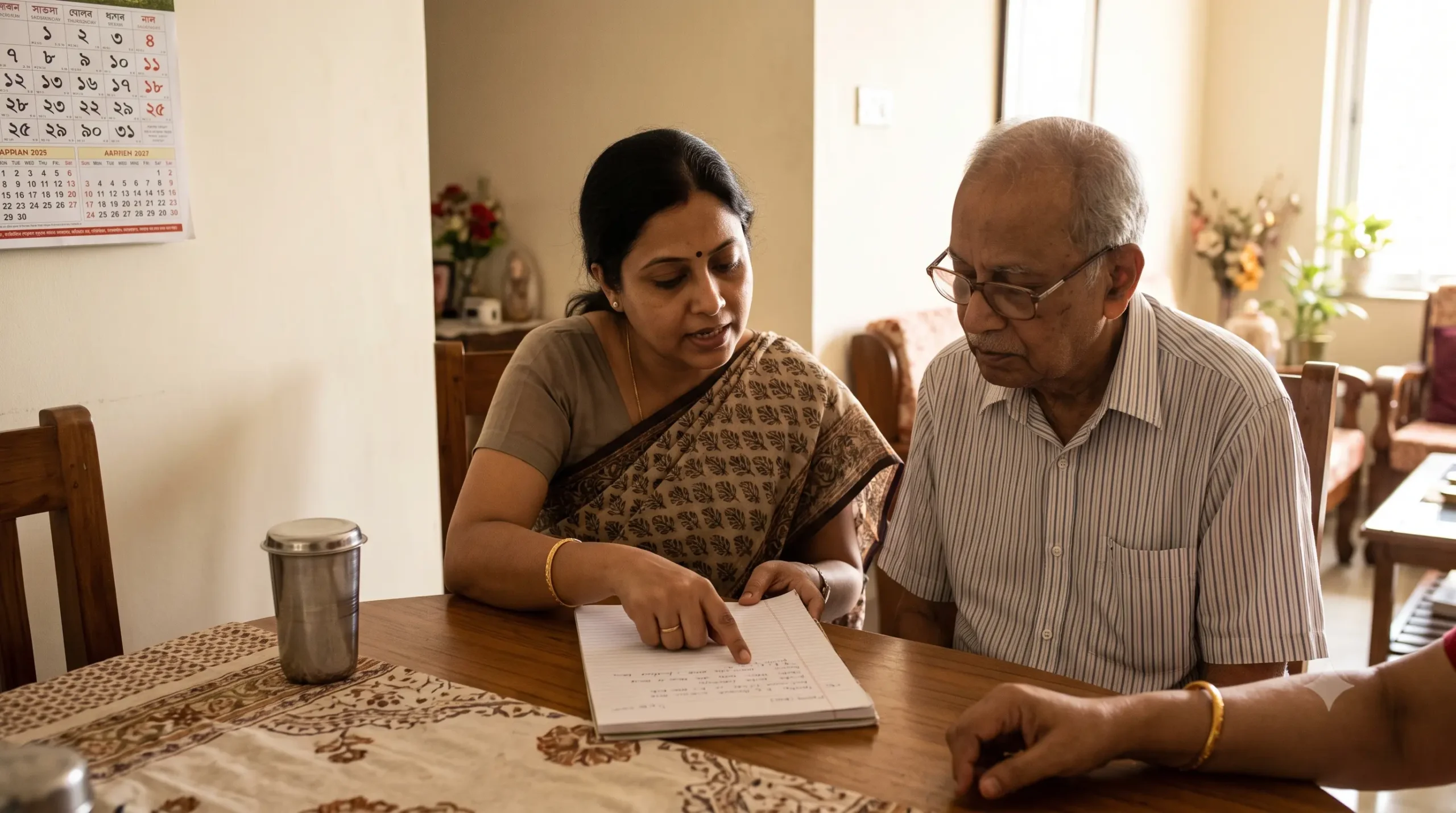
    Your father has a cardiologist for his heart, an endocrinologist for his diabetes, an orthopaedic surgeon he saw once for his knee, and a family GP he’s been going to for twenty years. Each of them knows their part of the picture. None of them has ever spoken to each other. And there is no single document anywhere that says what your father’s overall health situation is, what’s being monitored, or what should happen if something changes.

    Families often assume that once a parent has “been assessed,” the hard part is done. In practice, the assessment is the starting point. The part that actually determines whether care stays coordinated over months and years is the plan that comes out of it — a living document, not a one-time report.

    It starts with an assessment, but the plan is a separate thing

    A care plan is built on the findings of a proper clinical evaluation — what we cover in detail in our article on the Comprehensive Geriatric Assessment. That assessment identifies what’s going on medically, functionally, and cognitively. The care plan is what turns those findings into an actual working document: what needs to be monitored, by whom, how often, and what happens when something changes.

    The distinction matters because families sometimes stop at the assessment stage, treat it as a one-time report, and file it away. A care plan is meant to be used — referred back to, updated, and acted on.

    What’s actually in a written care plan

    A properly built geriatric care plan for a patient with multiple conditions typically covers the following, in one place:

    • A summary across all conditions — not five separate specialist notes, but one document that shows how the diabetes, heart condition, and joint issue interact and are being managed together
    • The complete medication plan — every medication, why it’s prescribed, and a record of when it was last reviewed for continued appropriateness (see our article on polypharmacy for why this matters as much as it does)
    • Functional and mobility goals — what your parent can currently do independently, what support they need, and what the realistic goal is over the coming months
    • A monitoring schedule — which measurements or reviews happen at what intervals, so nothing depends on someone remembering to ask
    • Clear escalation instructions — what specific symptoms or changes should prompt an urgent call versus what can wait for the next scheduled review, written in language a family member can actually act on in the moment
    • Instructions for whoever is providing day-to-day care — a caretaker or family member should be able to read the plan and understand what they’re responsible for watching, without needing a medical background to interpret it
    A plan is not the same as a diagnosis list

    A diagnosis list tells you what conditions your parent has. A care plan tells you what to do about them — together, on an ongoing basis. Many families have the former (usually scattered across several specialists’ prescriptions) and have never had the latter.

    Who is actually responsible for keeping it current

    This is the question that exposes most informal arrangements. When a new specialist is added, or a medication is changed, or a condition worsens — who updates the plan? In most families managing multiple specialists independently, the honest answer is nobody. Each doctor updates their own notes. Nobody holds the whole document.

    This is the specific gap that geriatric medicine is structured to close — a single clinician who holds the complete picture across all conditions, and whose responsibility, not an afterthought, is to keep the plan current as things change. When a new symptom appears or a specialist recommends a change, it gets reviewed against the whole plan, not treated in isolation.

    Why this matters more, not less, for families abroad

    For a family managing a parent’s care from another city or country, a written, current care plan is the difference between “I called the doctor and they said things are fine” and actually knowing what’s being tracked and why. It gives you something concrete to review together on a call, a clear point of contact for what to do if something changes, and a shared reference that doesn’t depend on being physically present to stay informed.

    Ask specifically whether a written plan exists, who updates it, and how often it’s reviewed. If the honest answer is that care is being coordinated informally between specialists your parent sees separately, that’s worth addressing directly rather than assuming it’s being handled.

    Signs your parent doesn’t have this — and is at risk because of it

    • Your parent sees three or more specialists who have never communicated with each other
    • Different doctors have given conflicting instructions and no one has reconciled them
    • There’s no single document anyone in the family can point to that summarises the overall situation
    • You don’t know what would count as “urgent enough to call” versus “can wait until the next appointment”
    • The person managing day-to-day care — a caretaker or family member — is working from memory rather than written instructions

    If several of these sound familiar, that’s not a reflection of anyone doing a poor job — it’s what happens by default when care is spread across specialists with no one holding the coordinating role. A structured geriatric care plan exists specifically to close that gap.
  • Old age home or care at home? How to actually decide for your parent in Kolkata

    Old age home or care at home? How to actually decide for your parent in Kolkata

    Families ask me this question more often than almost any other. Usually at a point of crisis: a parent has had a health event, or been discharged from hospital, or the current arrangement has stopped working. There is pressure to decide quickly. The emotional stakes are high. The guilt is already present before the conversation begins.

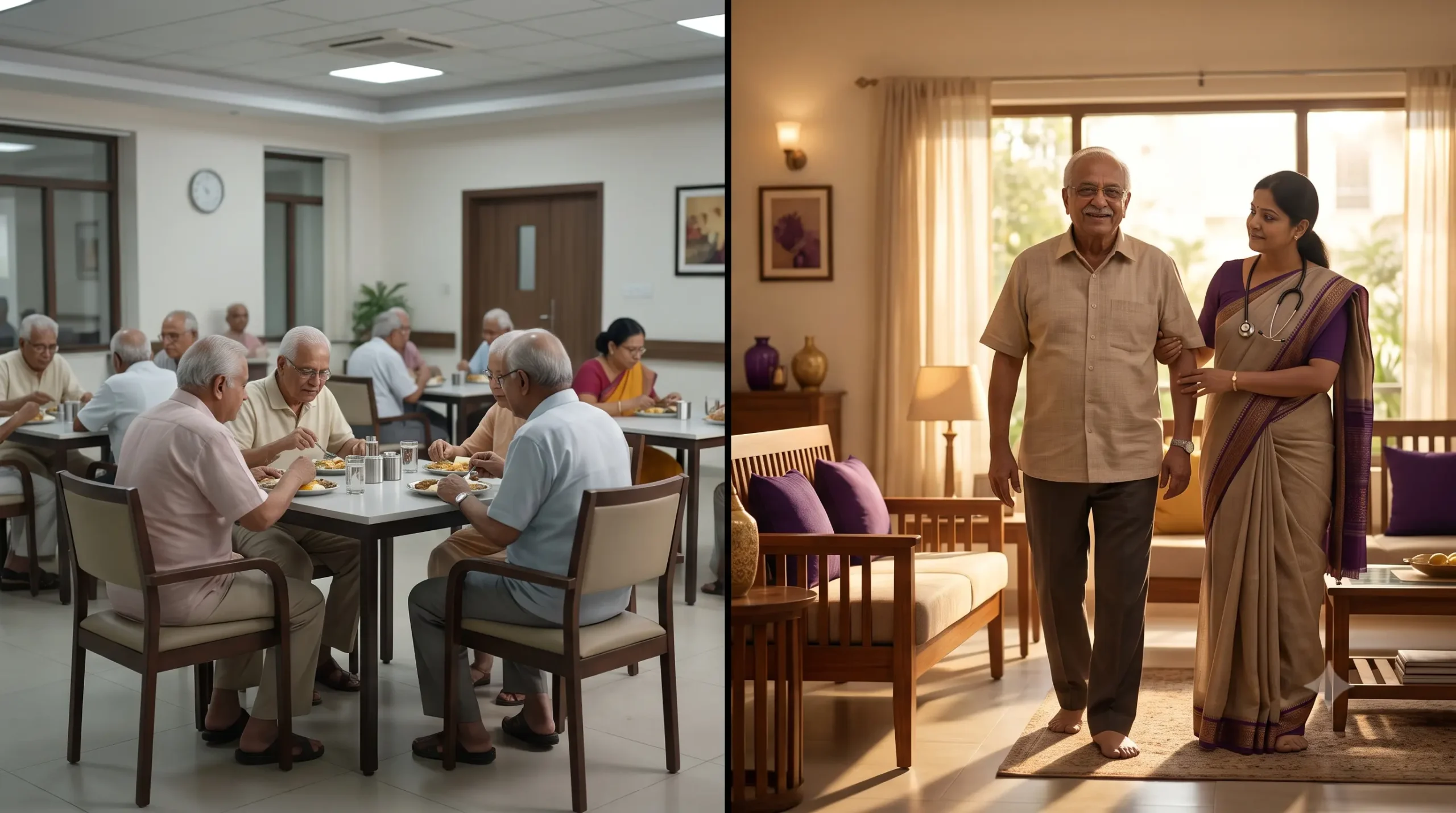
    I want to give you a more useful framework than the usual list of pros and cons, because the real decision is not “old age home versus home care” in the abstract. It is “what does this particular person need, and can that need be met at home, and at what cost to whom.”

    The question that actually matters

    Start with function, not preference. What can your parent do independently right now? Can they walk to the bathroom without assistance? Can they manage their own medication reliably? Can they feed themselves? Can they communicate if something is wrong?

    This is not about whether your parent seems fine at Sunday lunch. It is about what happens at 3am on a Tuesday when no family member is there. The gap between how an elderly person presents in family company and how they actually manage day-to-day is often significant, and families are frequently the last to know.

    A formal functional assessment, done by a geriatrician, gives you an accurate baseline. Without it, you are making a major decision based on an incomplete picture.

    When home care makes clinical sense

    For most elderly patients who are medically stable, cognitively intact, and emotionally attached to their home, staying at home with the right professional support is the better clinical option. The evidence on this is fairly consistent: familiar surroundings, preserved routines, and community connections produce better physical and cognitive outcomes than institutional relocation.

    The key phrase is “with the right professional support.” Home care works when it is actually adequate to the need. A daily visit from a trained attendant, plus regular medical oversight from a geriatrician who knows the patient, plus an emergency contact that functions, is a system. A well-meaning family member dropping in when they can is not a system.

    Home care is appropriate when the patient’s medical needs can be managed at home, when the home environment is safe enough (or can be made safe), when there is enough human support to cover the patient’s functional gaps, and when there is a medical professional overseeing the care plan and available when things change.

    When an old age home or assisted facility is the right answer

    There are situations where home care is genuinely not adequate, and being honest about this early prevents a great deal of suffering later.

    Advanced dementia with significant behavioural disturbance is one. Memory care facilities designed for dementia patients have physical environments, trained staff, and structured programs that cannot be replicated at home without round-the-clock professional staffing. Families who try to manage severe dementia at home without adequate support often end up with two patients: the elderly parent and the burned-out caregiver.

    High medical dependency is another. A patient who needs complex wound care, frequent suctioning, continuous monitoring, or interventions that require trained nursing more than a few times a day is probably better served in a setting with 24-hour clinical staff.

    Social isolation is a third. A patient who lives alone, has limited family contact, and is cognitively or physically unable to manage meaningful social interaction independently may be better served by a facility that provides community, activity, and regular human contact. Loneliness is not a soft problem. Its health consequences in elderly patients are measurable.

    The correct default is not a facility

    An old age home makes sense in specific circumstances. For most patients, the correct answer is: stay home, with the right professional support actually in place — not assumed to exist.

    The conversation you have to have with your parent

    In most cases, elderly patients have a strong preference to stay at home. This preference deserves serious weight. It is not merely sentiment. There is a real body of research showing that elderly patients who remain in familiar environments show slower cognitive decline and better physical outcomes.

    But the preference has to be considered alongside the realistic assessment of whether it can be honoured safely. A patient who insists on staying at home alone with no support, and who is no longer capable of safely managing alone, is not exercising autonomy in a meaningful sense. They are expressing a wish that the family and clinical team have to help them achieve in a way that does not cause harm.

    The productive conversation is not “we think you should go to an old age home.” It is “what do you need in order to stay at home safely, and can we actually provide that?” If the answer to the second part is no, then the conversation has to go somewhere harder. But it should start there.

    What Kolkata families often get wrong

    The most common mistake I see is deciding based on availability rather than fit. A family finds an old age home that has a vacancy and puts a parent there because the crisis needs to be resolved. The decision is driven by logistics, not by a proper assessment of what the parent needs. Sometimes this works out. Often it does not.

    The second mistake is not getting medical input into the decision. This is a clinical question as much as a family one. What the patient’s condition is, what it is likely to become, what level of support is required, and whether that support can be delivered at home are questions that benefit from geriatric expertise. Deciding without that input is like choosing a treatment plan without a diagnosis.

    A practical starting point

    If you are facing this decision now, the most useful first step is a geriatric assessment of your parent at home. Not in a clinic, not based on what the hospital said at discharge, but a structured evaluation in the actual environment where the care will happen. That assessment gives you the clinical baseline you need to make the decision properly, and it tells you what level of support home care would actually require.

    From there, you can make the comparison honestly: what adequate home care would look like versus what an appropriate facility would offer, and which is the better fit for this person at this stage.

    There is no universally correct answer. But there is a correct process, and it starts with accurate information rather than panic or guilt.

  • How to find reliable 24/7 elderly care at home in Kolkata

    How to find reliable 24/7 elderly care at home in Kolkata

    When families in Kolkata start searching for “24/7 home care” or “round-the-clock attendants,” it is usually during a moment of crisis. A sudden hospital discharge, a frightening slip in the bathroom, a blood sugar spike. Adult children are scrambling to find help, and they need it now.

    In that rush, most families make a critical mistake: they equate 24/7 elderly care with hiring a full-time bedside attendant. An attendant at the bedside is not a care system. It is one piece of one. And without the other pieces in place, the falls and hospital admissions the family was trying to prevent tend to happen anyway — sometimes faster.

    The hidden problem with Kolkata’s caregiver market

    The caregiver market in Kolkata is largely unregulated. Most attendants have no formal training in geriatric care. They learn on the job, usually under no clinical supervision, with no defined protocols and no one checking their work.

    Their role is typically reduced to the most visible task: handing over medications on time. But elderly patients need considerably more than a medication reminder. The gaps that accumulate in a standard unmonitored attendant arrangement are the same gaps that cause things to go wrong.

    No physical maintenance
    Untrained attendants are rarely equipped with joint mobility routines or balance exercises that prevent functional decline. Without these, mobility quietly deteriorates week by week.

    No cognitive engagement
    Memory-support techniques and cognitive stimulation require specific training. Without them, a patient who could be slowing their cognitive decline is simply left with a television.

    Passive observation only
    Without clinical training, an attendant cannot recognise the early signs that something is changing — the slight unsteadiness, the change in appetite, the confusion that appears briefly and then clears. These are the signals that matter.

    No one reviewing the whole picture
    Multiple medications, chronic conditions, and functional changes interact in ways that require a clinician to track. An attendant is not that clinician — and a quarterly OPD visit rarely provides enough oversight either.

    Stop waiting for the crisis

    Most families wait for a major emergency before seeking proper medical guidance. A fall with a fracture. A hospital admission. A sudden deterioration that seems to come from nowhere but, in retrospect, had been coming for months.

    The warning signs that precede these events are nearly always there. They are dismissed because they look minor, because they seem like normal ageing, or because nobody at home has the clinical training to recognise what they mean.

    Seek a clinical evaluation promptly if your parent shows any of the following:

    • A momentary tip in balance or instability when standing up from a chair
    • Brief or sudden episodes of dizziness
    • Fluctuating blood sugar causing even temporary confusion or lightheadedness
    • Brief, unexplained loss of consciousness or near-syncope
    • New difficulty with a task they were managing independently last month
    • Any change in sleep pattern, appetite, or social engagement that has persisted for more than two weeks

    None of these are “normal signs of ageing.” They are clinical signals that your parent’s care plan needs review — and that review should happen before the event everyone is trying to avoid.

    The preventive case

    When elderly parents receive regular, proactive oversight from a geriatrician, the major crises — hospitalisations, fall injuries, acute medication toxicity — can very often be prevented entirely. The families who do best are the ones who come in before they are in trouble.

    What a complete care system actually looks like

    Reliable 24/7 elderly care is not a choice between an attendant and a doctor. It is both, working together — with the clinical layer directing the practical one.

    When a geriatric specialist visits your parent at home, the visit does not end with an examination and a prescription. It changes how the entire care environment operates.

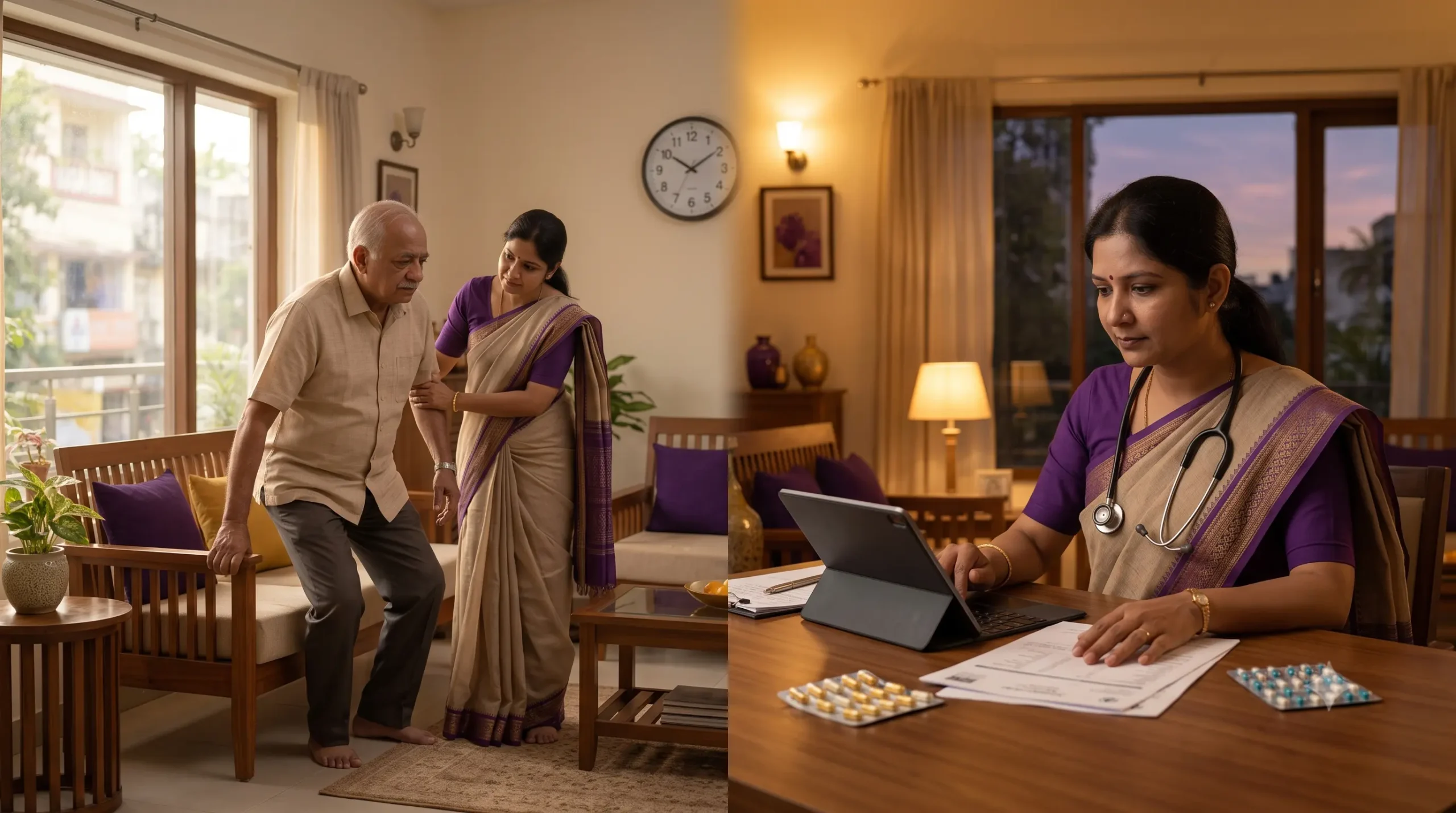
    Caregiver protocols. The doctor provides specific, written daily guidance for the attendant — joint mobility movements, balance exercises, cognitive engagement routines, nutrition targets, and a list of observable changes that should trigger a call. The attendant stops being a passive presence and becomes an active participant in a documented care plan.

    Full medication review. Using validated criteria like STOPP/START, designed specifically for elderly patients, every medication is assessed for appropriateness, interaction risk, and continued necessity. This is one of the highest-yield interventions in geriatric medicine — and it almost never happens in standard attendant-only care arrangements.

    Actionable direction between visits. A care plan is only useful if it is specific enough to follow. The output of a GeraVita visit is a written document that tells whoever is at home exactly what to do each day and exactly what to report.

    Complete transparency for families who are not there

    If you live in Bangalore, Mumbai, or outside India, managing a parent’s care in Kolkata means operating largely on trust and intermittent phone calls. Generic agencies give you reassurance. GeraVita gives you clinical information.

    • 🔔
      Real-time milestone notifications
      Every listed relative receives instant notifications for appointment bookings, doctor arrivals, and visit completions — so you always know when care happened.
    • 📋
      Same-day WhatsApp clinical reports
      A written report is delivered via WhatsApp immediately after every visit — covering full clinical findings, medication review outcomes, and the specific care steps put in place.
    • 📞
      Direct physician contact for critical findings
      If the visiting clinician identifies something that needs immediate family awareness, they call the primary contact directly — not after the visit, not in the next report. Then.
    • 📅
      Monthly family liaison calls
      Once a month, a specialist geriatrician holds a dedicated call with long-distance family members — reviewing multi-system trends, explaining lab results in plain language, and discussing care adjustments together.

    Why preventive oversight is the most cost-effective decision

    The cost concern families raise most often is about the regular visits themselves. The economics actually run in the opposite direction from what most families assume.

    A single preventable hospital admission — for a medication interaction, a fall with a fracture, an acute infection that a clinical eye would have caught early — costs more in both money and recovery time than several years of proactive geriatric oversight. ICU admissions, emergency transport, prolonged hospital stays, and the functional decline that follows hospitalisation in elderly patients are all far more expensive, financially and otherwise, than the visits that prevent them.

    With consistent clinical maintenance, many elderly patients who would otherwise require round-the-clock supervision remain functionally independent longer. In a significant number of cases, proper long-term clinical care means they never need a 24/7 caregiver at all.

    Serving families across all of Kolkata

    GeraVita provides home-based geriatric consultations across Kolkata — Newtown, Rajarhat, Salt Lake, Ballygunge, Jadavpur, Behala, and surrounding areas. We believe that where a patient lives within the city should not determine whether they receive specialist clinical oversight.

    Every visit is conducted by Dr. Antarikhya Bordoloi, MD Geriatrics, with postgraduate training in palliative care. Not a coordinator. Not a nurse under remote supervision. The specialist herself.

    The lowest-risk way to start

    We do not ask for long-term commitments upfront. The most practical first step is a single Pay-As-You-Go home visit. In that visit, Dr. Antarikhya conducts a baseline clinical evaluation, reviews the current medication list, assesses the home environment for risks, and provides the attending caregiver — if there is one — with specific daily guidance.

    It gives your parent a proper clinical baseline. It gives you a written picture of where things actually stand. And it gives both sides the information needed to decide what ongoing care makes sense.

    If your parent is in Kolkata and you want to know what the right care arrangement actually looks like for their specific situation, that visit is the answer to start with.