Tag: caretaker

  • Why elderly falls at home are a medical emergency, not an accident

    Why elderly falls at home are a medical emergency, not an accident

    When an elderly parent falls at home, the family’s first instinct is usually to check for broken bones. If nothing is fractured, there is relief. The fall gets filed away as a clumsy moment. It probably will not happen again.

    This is the wrong way to think about it. A fall is not an event. It is a symptom. And in a person over 65, it almost always has a cause that can be identified and, in many cases, corrected.

    I have seen this pattern enough times that I now consider an unexplained fall a clinical red flag, the same way an unexplained weight loss is a red flag. The fall itself is what you can see. The reason behind it is what matters.

    What actually causes falls in elderly patients

    The short answer is: almost never just clumsiness.

    In clinical practice, the common culprits behind falls are:

    • Polypharmacy and drug interactions. If your parent is on four or more medications, there is a real chance that one or more of them is causing dizziness, orthostatic hypotension (a drop in blood pressure when standing up), or sedation. Blood pressure medications, diuretics, antidepressants, and sleeping tablets are the most frequent offenders. A geriatrician reviewing the full medication list can often spot the problem within minutes.
    • Undiagnosed vision changes. Cataracts progress slowly enough that patients often do not notice how poor their vision has become until they cannot judge the depth of a step. Peripheral vision loss, which accompanies some forms of glaucoma, creates a particular fall risk at the edges of staircases.
    • Inner ear problems and vestibular dysfunction. Benign paroxysmal positional vertigo (BPPV) is surprisingly common in older adults and causes sudden dizziness when the head changes position. It is also easily treatable once diagnosed.
    • Muscle weakness and deconditioning. A period of bed rest after illness, or simply months of reduced activity, can cause significant muscle loss in elderly patients. The thigh muscles responsible for catching a stumble lose strength faster than most people realise.
    • Early cognitive decline. Falls are sometimes the first visible sign of early dementia. Spatial awareness and the automatic motor responses that prevent a stumble from becoming a fall are partly governed by cognitive function.
    • Hypoglycaemia in diabetic patients. A blood sugar dip, even a mild one, can cause lightheadedness and impaired coordination without the patient realising what is happening.

    The second fall is the dangerous one

    A first fall in an elderly person roughly doubles the risk of a second fall within six months. The second fall is when serious injuries happen. Hip fractures in patients over 70 carry a one-year mortality rate that most families are not aware of. A significant number of elderly patients who fracture a hip do not recover their prior level of function.

    I am not saying this to frighten anyone. I am saying it because the window between the first fall and the second is exactly when a proper assessment can make the most difference. That window tends to get wasted because the first fall did not result in an injury.

    A fall without a fracture is not a safe fall

    A fall without a fracture is a warning that the conditions for a fall are present and likely to produce another one. The absence of injury this time is not evidence that nothing is wrong.

    What a geriatric fall assessment actually looks at

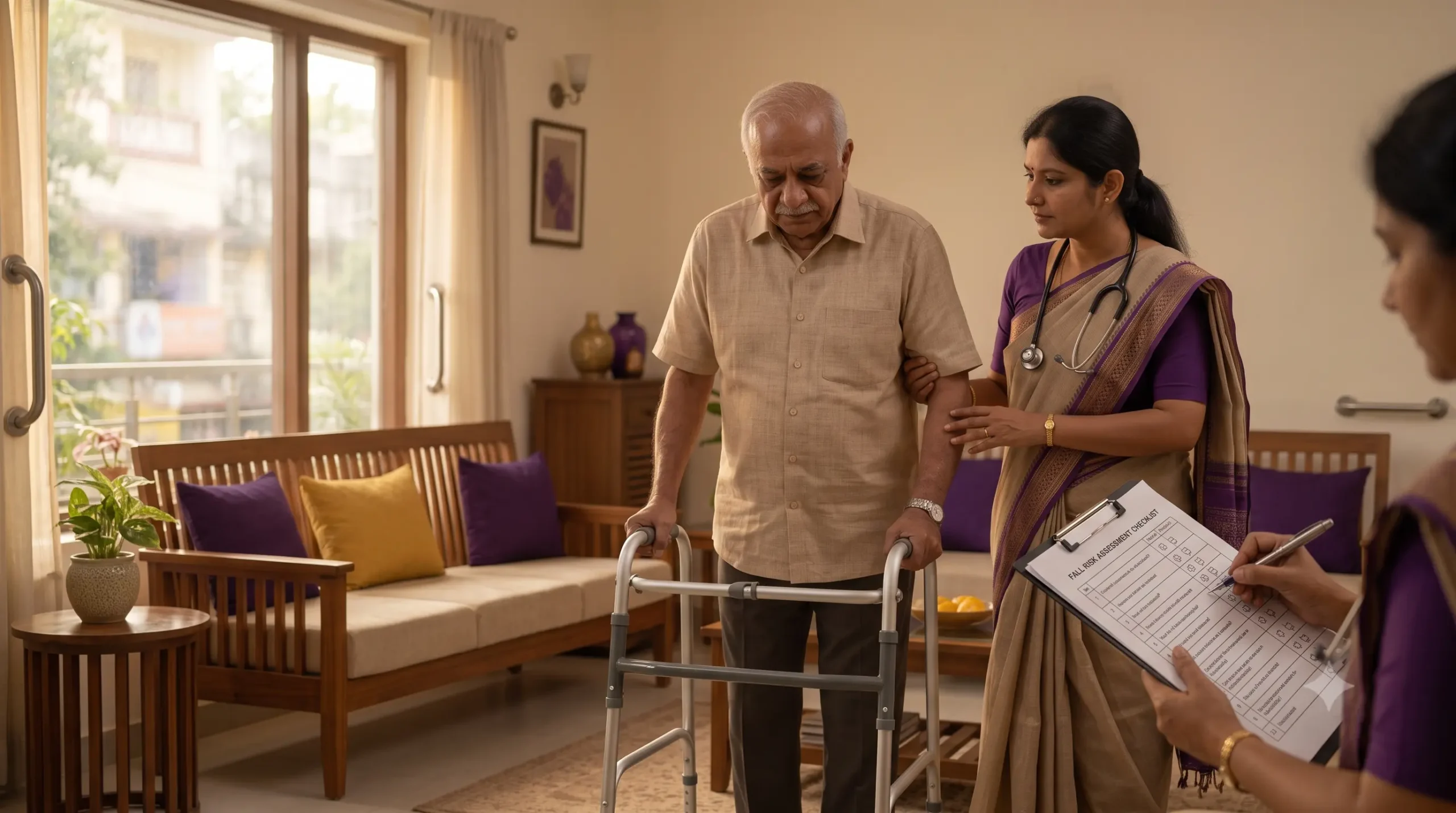
    When I assess a patient following a fall, I am not just asking “did you trip on something.” The assessment covers:

    • A full medication review, looking for drugs that affect balance, blood pressure, or alertness
    • Blood pressure measured lying down and standing (to check for orthostatic drops)
    • Gait and balance assessment using the Timed Up and Go test
    • Muscle strength, particularly in the lower limbs
    • Brief cognitive screening
    • Vision assessment
    • Foot and footwear review
    • A home safety review covering lighting, rugs, bathroom grab bars, and staircase hazards

    This takes time. It cannot be done in a five-minute appointment at a busy outpatient clinic. It is one of the reasons home visits matter for elderly patients — I can assess the actual environment the patient lives in, not a consulting room.

    What families can do at home right now

    While waiting for a proper medical assessment, there are practical steps that reduce risk.

    Remove rugs that are not secured to the floor, particularly in hallways and bathrooms. Rugs with curled edges are responsible for a disproportionate number of indoor falls. Lighting is the second thing to look at. The path from the bedroom to the bathroom at 2am should be lit well enough that your parent does not need to find a switch. Night lights in these areas cost very little and prevent real harm.

    Grab bars in the bathroom are not optional for someone who has already fallen once. The toilet, the shower entry, and the bathtub all need support points. In Kolkata’s typical bathroom design, the transition from the wet area to the dry area is a particular hazard.

    Footwear matters more than most families realise. Many elderly patients wear slippers or socks on tiled floors. Both are fall risks. Supportive footwear with non-slip soles worn inside the house is a direct fall-prevention measure.

    When to worry immediately

    Some falls require immediate medical attention regardless of whether the patient reports pain. A fall followed by confusion, a headache that worsens over hours, difficulty walking, or any loss of consciousness — even brief — means a hospital visit is needed that day. Subdural haematomas (bleeding inside the skull) can appear hours after a head injury in elderly patients who are on blood thinners, and the initial presentation can look deceptively mild.

    If your parent falls and hits their head, and they are on aspirin, clopidogrel, warfarin, or any of the newer anticoagulants, do not take a wait-and-see approach. Get them assessed.

    The right response to a first fall

    The right response is a clinical assessment. Not reassurance. Not telling your parent to be more careful. An assessment by someone trained in geriatrics, who can review the medication list, check blood pressure in different positions, watch how your parent walks, and look at the home environment.

    Falls are preventable in a significant proportion of cases. But only if someone looks for the cause before the second one happens.
  • When your elderly parent refuses to see a doctor

    When your elderly parent refuses to see a doctor

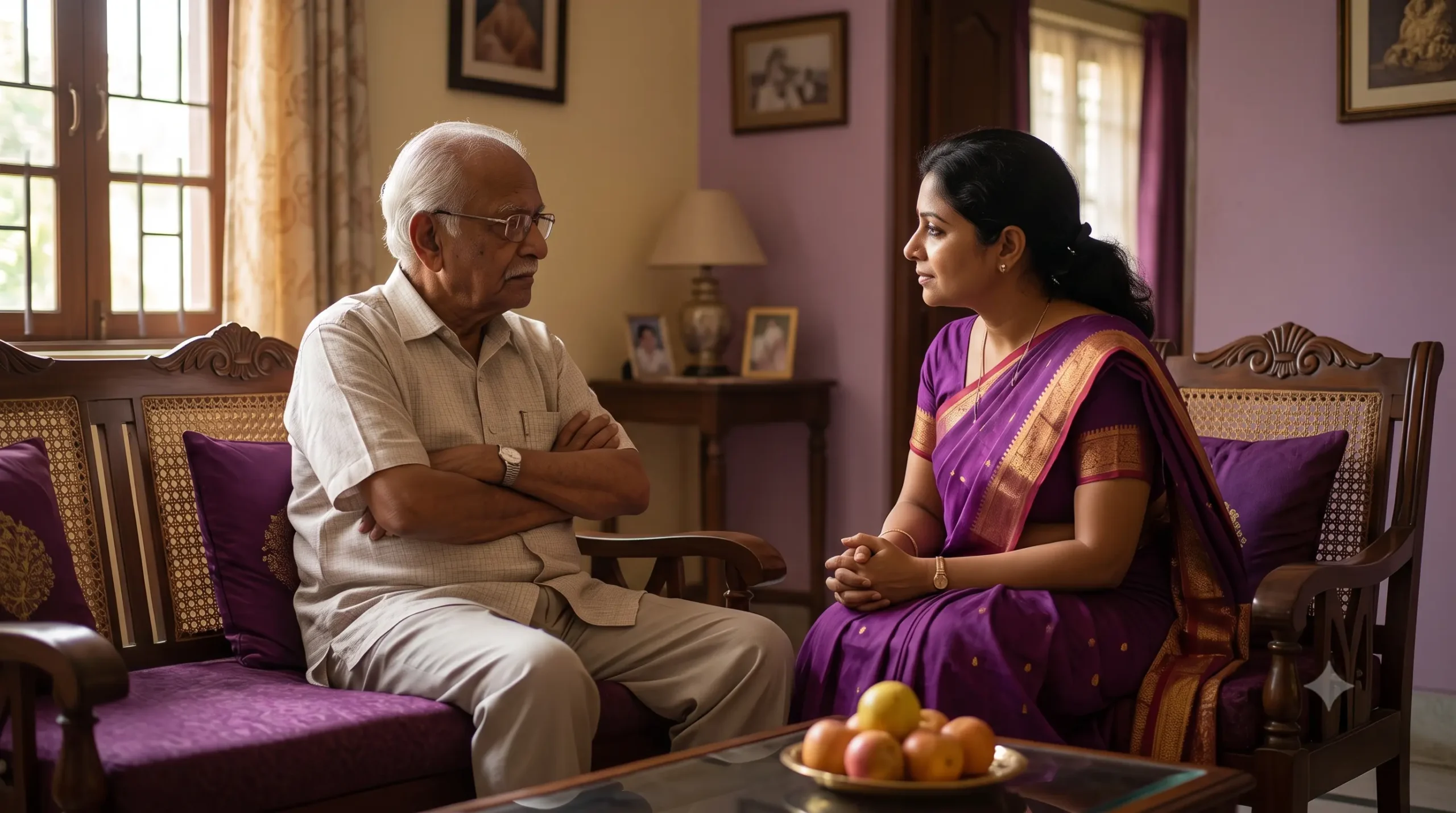
    This is one of the most common things families talk to me about. Not the medical condition itself, but the problem that comes before the medical condition: the parent who will not go to a doctor.

    Sometimes it is dressed up as practicality. The clinic is too far. The queues are too long. It is not that serious. More often, if you sit with it for a moment, there is something else going on. And understanding that something else is usually the only way to actually move forward.

    Why elderly patients resist medical care

    The fear underneath most refusals is not a fear of doctors. It is a fear of what the doctor might find. An elderly person who has managed to feel reasonably functional, who has built routines and maintained independence, often understands at some level that a medical examination might produce information that changes all of that. A diagnosis of something serious, a recommendation to stop driving, a suggestion that they can no longer manage alone. The refusal is a way of keeping that information at bay.

    There are other things too. Many elderly patients in Kolkata grew up in a generation where doctors were seen primarily for emergencies, not for check-ups or chronic management. The idea that you go to a doctor when you are sick, not as a precaution, is deeply ingrained. A patient who does not feel sick does not understand why anyone is worried.

    Cognitive decline adds another layer. Early dementia can affect insight. A patient whose memory and reasoning have already started to slip may genuinely not perceive that anything is wrong, because the part of the brain that would register the problem is itself affected. This is not stubbornness. It is a symptom.

    And then there are patients who have had bad experiences. An earlier doctor who was dismissive, a consultation that produced a complicated prescription and no explanation, a hospital visit that was frightening or undignified. These patients are not being irrational when they resist. They have reasons.

    What families usually try, and why it often fails

    The standard approach is to argue. To list the reasons why the parent should see a doctor. To escalate those reasons until everyone is frustrated. This almost never works.

    Persuasion that frames the parent as someone who needs to be managed tends to produce resistance, because adults who have been independent for sixty or seventy years do not respond well to being managed. The framing of “you need to see a doctor” puts the parent in a passive position and triggers exactly the kind of assertion of autonomy you are trying to get around.

    Threats and ultimatums are worse. They damage the relationship without producing compliance, and they make future conversations harder.

    The goal is not to win the argument

    The goal is not to win the argument about whether the parent should see a doctor. The goal is to get them the care they need. These are not always achieved by the same method.

    Approaches that actually work

    The most effective reframe I have seen families use is shifting from “you need to be examined” to “I would feel better if someone checked on you.” This sounds like a small difference, but it is not. It moves the stated reason for the visit away from something being wrong with the parent, and toward something the family member needs. Most elderly parents who love their children will do things for their children’s peace of mind that they would refuse for their own wellbeing.

    A home visit removes the practical obstacles that are often used as excuses, and removes the clinical environment that some patients find threatening. When a doctor comes to the house, on the parent’s territory, in their chair, with their tea, the dynamic is different. I have had patients who reportedly refused to visit any clinic for years have genuinely productive conversations in their own sitting room.

    Starting with something non-threatening helps. A blood pressure check, a medication review, a general conversation about how they are sleeping. Not “I am going to examine you for the serious illness you might have.” The relationship has to be built before the more difficult clinical work can happen. This is not deception. It is how clinical trust works with any patient.

    If there is one family member the patient trusts more than others, that person should be the one to make the initial request. Often there is a sibling, or a grandchild, or a neighbour, whose opinion carries more weight than the child who calls every Sunday from another city. Use that relationship.

    When the refusal itself needs to be assessed

    There are situations where the refusal is not simply a preference or a fear. If your parent is refusing all medical care, neglecting personal hygiene, making poor decisions about food or finances, or showing changes in behaviour alongside the refusal, the refusal itself may be a symptom of cognitive decline. In these cases, the question of how to help is a clinical question, not just a family dynamics question, and it warrants its own assessment.

    India’s legal framework around consent and medical decision-making for patients who lack capacity is complicated and inconsistently applied. If you are facing a situation where a parent cannot make safe decisions for themselves and is refusing help, getting proper geriatric and legal guidance early saves a great deal of difficulty later.

    The role of the right doctor

    Not every doctor is equally effective with resistant elderly patients. Geriatric medicine, by training and temperament, tends to attract practitioners who are comfortable with slow trust-building and who understand that the clinical relationship with an elderly patient has to be built over time. A fifteen-minute rushed outpatient consultation is often not the right format for a first encounter with someone who is already wary.

    If your parent has refused general practitioners, it is worth thinking about whether a specialist in geriatric medicine, coming to the home, might change the dynamic. The setting matters. The pacing matters. The framing matters.

    The parent who refuses today will often accept care if the approach is right. Very few elderly patients are genuinely indifferent to their own health. Most of them are afraid, or have been burned before, or are protecting something. Find what that is, and the refusal usually becomes negotiable.