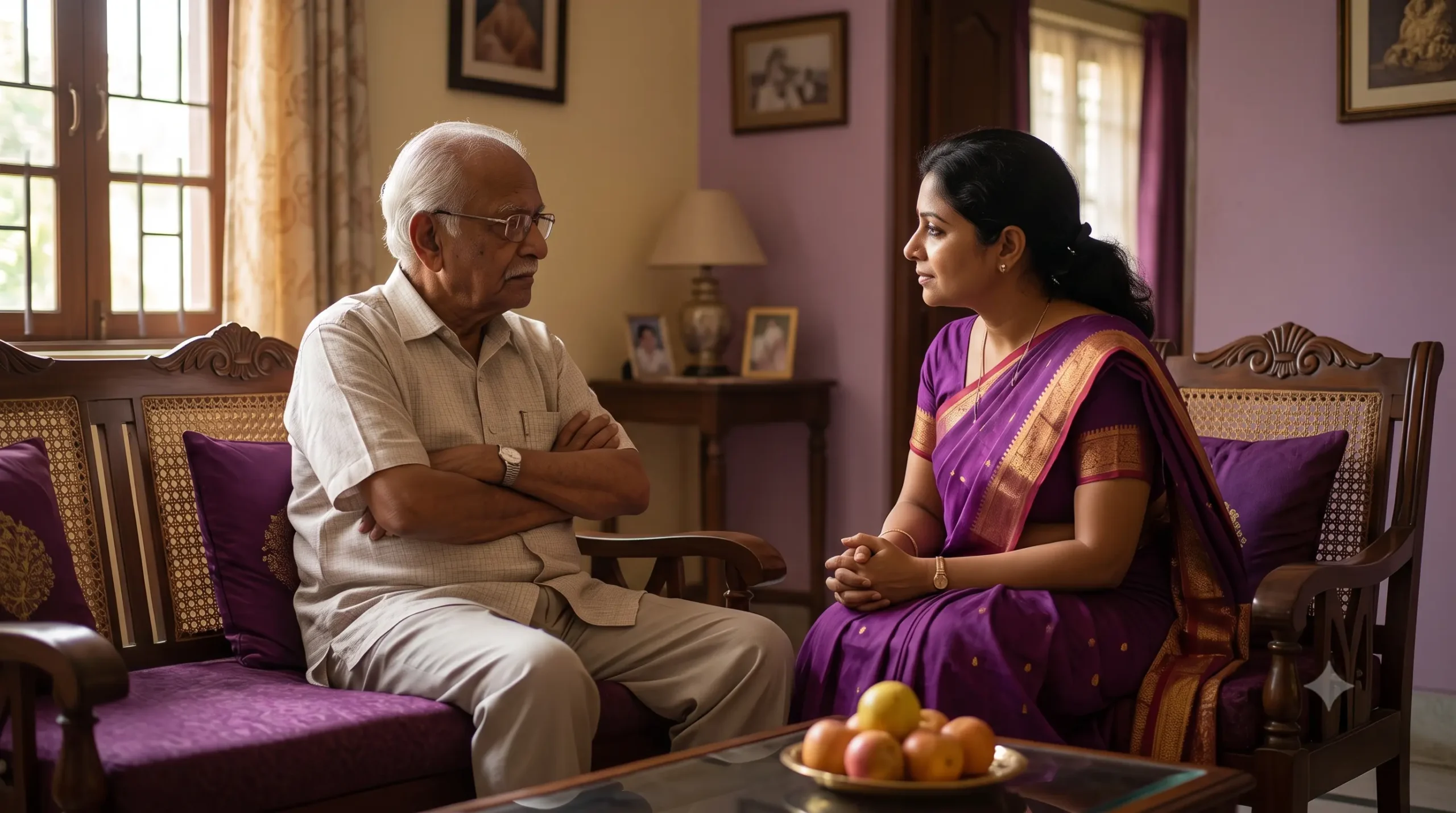
This is one of the most common things families talk to me about. Not the medical condition itself, but the problem that comes before the medical condition: the parent who will not go to a doctor.
Sometimes it is dressed up as practicality. The clinic is too far. The queues are too long. It is not that serious. More often, if you sit with it for a moment, there is something else going on. And understanding that something else is usually the only way to actually move forward.
Why elderly patients resist medical care
The fear underneath most refusals is not a fear of doctors. It is a fear of what the doctor might find. An elderly person who has managed to feel reasonably functional, who has built routines and maintained independence, often understands at some level that a medical examination might produce information that changes all of that. A diagnosis of something serious, a recommendation to stop driving, a suggestion that they can no longer manage alone. The refusal is a way of keeping that information at bay.
There are other things too. Many elderly patients in Kolkata grew up in a generation where doctors were seen primarily for emergencies, not for check-ups or chronic management. The idea that you go to a doctor when you are sick, not as a precaution, is deeply ingrained. A patient who does not feel sick does not understand why anyone is worried.
Cognitive decline adds another layer. Early dementia can affect insight. A patient whose memory and reasoning have already started to slip may genuinely not perceive that anything is wrong, because the part of the brain that would register the problem is itself affected. This is not stubbornness. It is a symptom.
And then there are patients who have had bad experiences. An earlier doctor who was dismissive, a consultation that produced a complicated prescription and no explanation, a hospital visit that was frightening or undignified. These patients are not being irrational when they resist. They have reasons.
What families usually try, and why it often fails
The standard approach is to argue. To list the reasons why the parent should see a doctor. To escalate those reasons until everyone is frustrated. This almost never works.
Persuasion that frames the parent as someone who needs to be managed tends to produce resistance, because adults who have been independent for sixty or seventy years do not respond well to being managed. The framing of “you need to see a doctor” puts the parent in a passive position and triggers exactly the kind of assertion of autonomy you are trying to get around.
Threats and ultimatums are worse. They damage the relationship without producing compliance, and they make future conversations harder.
The goal is not to win the argument about whether the parent should see a doctor. The goal is to get them the care they need. These are not always achieved by the same method.
Approaches that actually work
The most effective reframe I have seen families use is shifting from “you need to be examined” to “I would feel better if someone checked on you.” This sounds like a small difference, but it is not. It moves the stated reason for the visit away from something being wrong with the parent, and toward something the family member needs. Most elderly parents who love their children will do things for their children’s peace of mind that they would refuse for their own wellbeing.
A home visit removes the practical obstacles that are often used as excuses, and removes the clinical environment that some patients find threatening. When a doctor comes to the house, on the parent’s territory, in their chair, with their tea, the dynamic is different. I have had patients who reportedly refused to visit any clinic for years have genuinely productive conversations in their own sitting room.
Starting with something non-threatening helps. A blood pressure check, a medication review, a general conversation about how they are sleeping. Not “I am going to examine you for the serious illness you might have.” The relationship has to be built before the more difficult clinical work can happen. This is not deception. It is how clinical trust works with any patient.
If there is one family member the patient trusts more than others, that person should be the one to make the initial request. Often there is a sibling, or a grandchild, or a neighbour, whose opinion carries more weight than the child who calls every Sunday from another city. Use that relationship.
When the refusal itself needs to be assessed
There are situations where the refusal is not simply a preference or a fear. If your parent is refusing all medical care, neglecting personal hygiene, making poor decisions about food or finances, or showing changes in behaviour alongside the refusal, the refusal itself may be a symptom of cognitive decline. In these cases, the question of how to help is a clinical question, not just a family dynamics question, and it warrants its own assessment.
India’s legal framework around consent and medical decision-making for patients who lack capacity is complicated and inconsistently applied. If you are facing a situation where a parent cannot make safe decisions for themselves and is refusing help, getting proper geriatric and legal guidance early saves a great deal of difficulty later.
The role of the right doctor
Not every doctor is equally effective with resistant elderly patients. Geriatric medicine, by training and temperament, tends to attract practitioners who are comfortable with slow trust-building and who understand that the clinical relationship with an elderly patient has to be built over time. A fifteen-minute rushed outpatient consultation is often not the right format for a first encounter with someone who is already wary.
If your parent has refused general practitioners, it is worth thinking about whether a specialist in geriatric medicine, coming to the home, might change the dynamic. The setting matters. The pacing matters. The framing matters.
The parent who refuses today will often accept care if the approach is right. Very few elderly patients are genuinely indifferent to their own health. Most of them are afraid, or have been burned before, or are protecting something. Find what that is, and the refusal usually becomes negotiable.
Leave a Reply
You must be logged in to post a comment.